5 Reasons Your Car Battery Keeps Dying
A dead car battery is one of the most common problems drivers face. Few things are more frustrating than turning the key or pressing the start button only to find that your car won’t start. While batteries naturally wear out over time, repeated battery failures often indicate an underlying issue that needs attention.
Understanding why your car battery keeps dying can help you prevent breakdowns, avoid expensive repairs, and keep your vehicle running reliably.
In this article, we will explore the five most common reasons car batteries lose power and what you can do to fix the problem.
1. An Old or Worn-Out Battery
One of the most common reasons a car battery keeps dying is simply age. Most car batteries have a lifespan of around 3 to 5 years, depending on driving conditions, weather, and maintenance.
As batteries age, their ability to hold a charge gradually decreases. Eventually, they can no longer provide enough power to start the engine or run electrical components.
Signs of an aging battery
- Slow engine crank when starting
- Dim headlights
- Frequent need for jump-starts
- Battery warning light on the dashboard
If your battery is several years old and showing these symptoms, replacing it may be the best solution.
2. Leaving Lights or Electronics On
Another common cause of a dead battery is leaving electrical components on when the engine is off. Headlights, interior lights, and infotainment systems can slowly drain the battery if they remain on for an extended period.
Even small devices such as phone chargers plugged into the power outlet can contribute to battery drain.
Examples of accidental battery drain
- Headlights left on overnight
- Interior dome lights left on
- Trunk or glove box lights staying on
- Dash cameras or accessories running continuously
Modern vehicles often have automatic shut-off systems, but older vehicles may not.
3. Faulty Alternator
The alternator is responsible for charging the battery while the engine is running. If the alternator fails or becomes weak, it may not recharge the battery properly.
This means your battery may slowly lose power even while driving.
Signs of alternator problems
- Battery warning light appears on the dashboard
- Electrical systems malfunction
- Headlights flicker or dim while driving
- Engine stalls or struggles to start
If your battery repeatedly dies even after being replaced, a faulty alternator could be the real problem.
4. Corroded or Loose Battery Connections
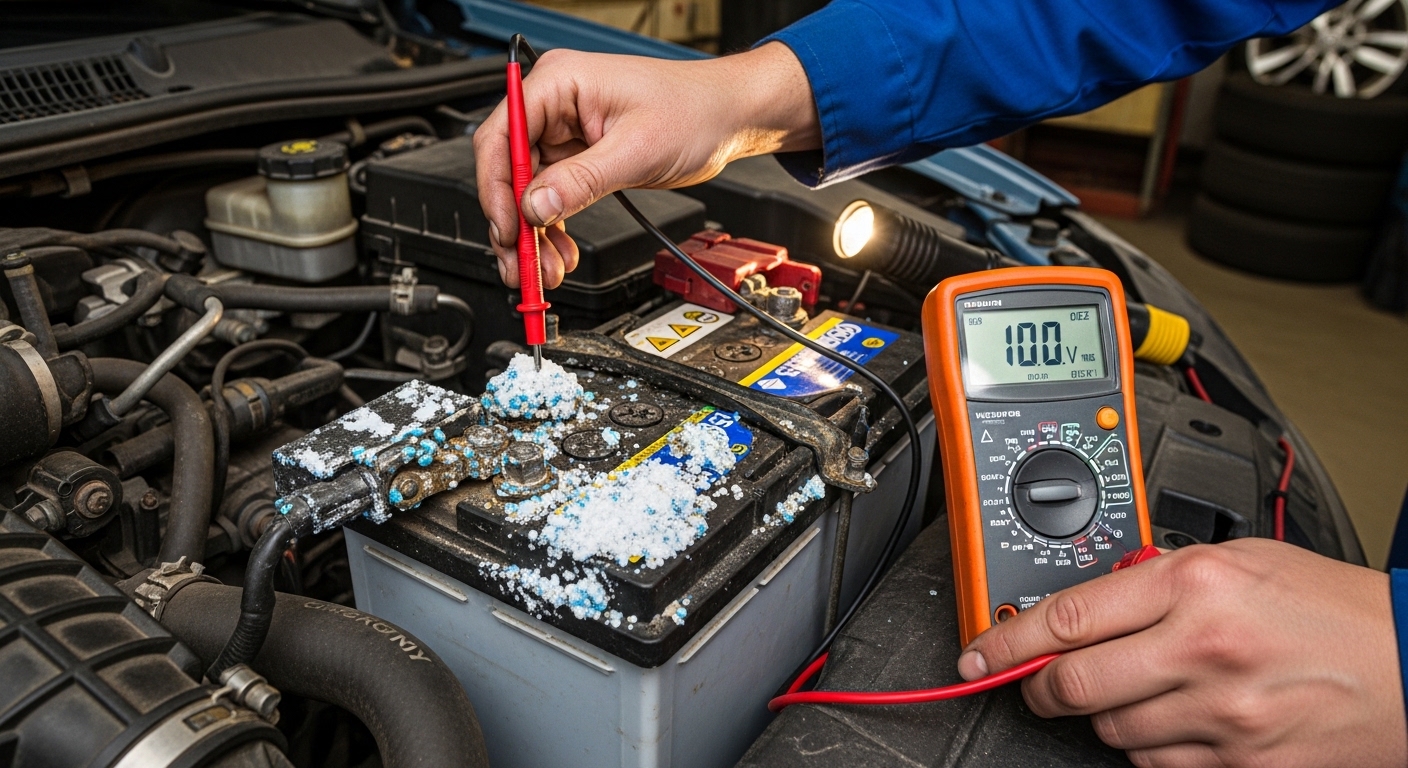
Battery terminals must have clean and secure connections to function properly. Corrosion or loose cables can interrupt the flow of electricity between the battery and the vehicle’s electrical system.
Corrosion usually appears as a white or bluish buildup around the battery terminals.
Effects of poor battery connections
- Difficulty starting the engine
- Intermittent electrical problems
- Weak power supply to vehicle systems
Cleaning the terminals and tightening the connections can often restore proper battery performance.
5. Parasitic Battery Drain
A parasitic drain occurs when an electrical component continues to use battery power even after the vehicle is turned off. Modern vehicles have many electronic systems that remain active, but a malfunctioning component can consume more power than normal.
Common causes include:
- Faulty wiring
- Malfunctioning relays
- Aftermarket electronics
- Security systems or alarms
If your battery dies frequently overnight or after the car sits unused for a short time, a parasitic drain may be the cause. A professional mechanic can perform electrical testing to identify the issue.
How to Prevent Your Car Battery from Dying
While some battery problems are unavoidable, proper care and maintenance can help extend its lifespan.
Helpful tips include:
- Turn off headlights and electronics when leaving the car
- Drive regularly to keep the battery charged
- Keep battery terminals clean
- Have your charging system inspected during routine servicing
- Replace the battery before it becomes too old
Regular vehicle maintenance can help detect potential issues before they lead to a breakdown.
When Should You Replace Your Car Battery?
If your battery is more than three to five years old or frequently needs jump-starting, it may be time for a replacement.
Drivers should also consider replacing the battery if they notice:
- Slow engine starting
- Electrical systems malfunctioning
- The battery warning light appearing frequently
Replacing a weak battery early can prevent inconvenient breakdowns and ensure reliable vehicle performance.
Final Thoughts
A car battery that keeps dying is usually a sign of an underlying issue rather than just bad luck. Problems such as an aging battery, electrical drains, faulty alternators, or poor connections can all cause repeated battery failures.
By identifying the cause early and performing regular maintenance, drivers can avoid unexpected breakdowns and keep their vehicles running smoothly.
If your car battery continues to lose power, it is best to have your vehicle inspected by a professional mechanic to determine the exact cause and prevent future problems.